Overview
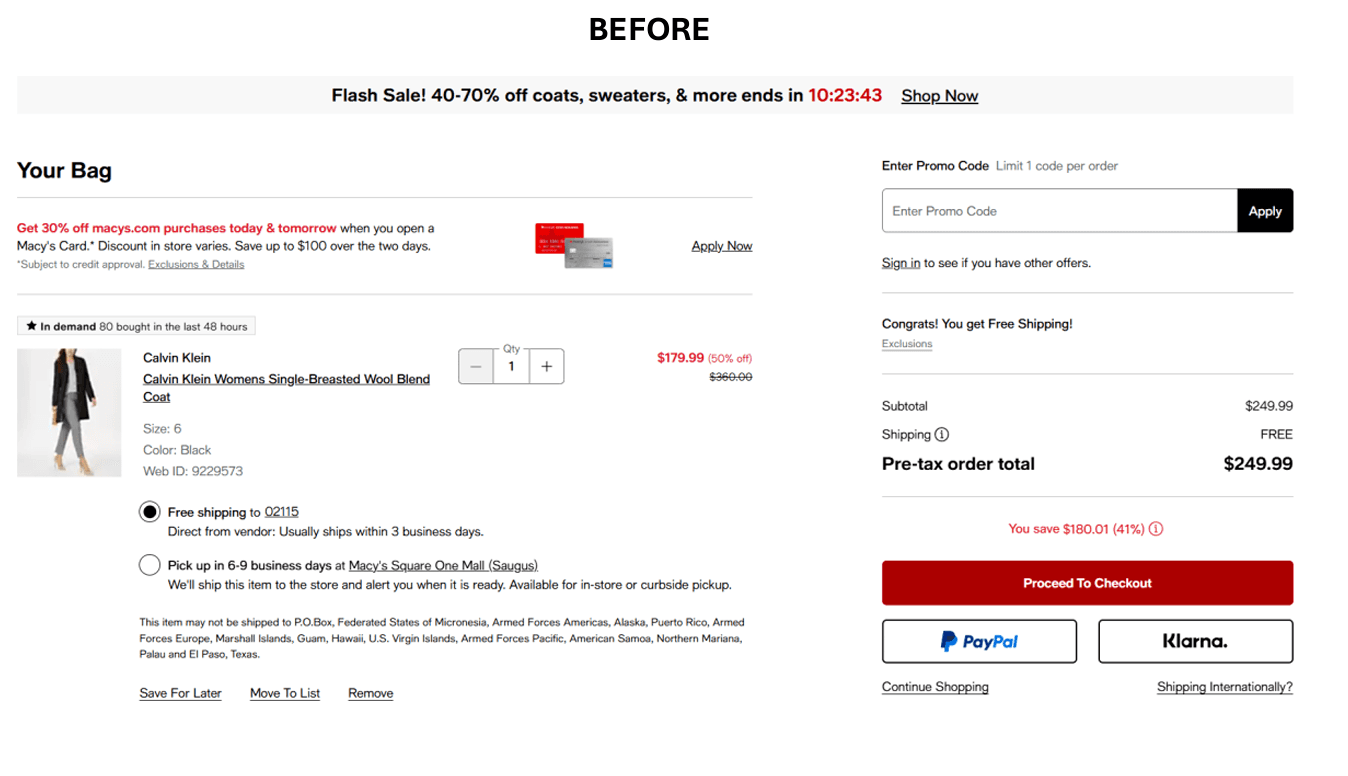
Macy’s existing shopping cart lacked flexibility, requiring users to leave the cart to make simple
changes like adjusting sizes or quantities. The goal of this redesign was to streamline the purchase
process, reduce user friction, and create opportunities for product discovery. I designed an
improved cart flow that allowed real-time edits and contextual recommendations, making the user
journey faster and more intuitive.
My Role
Users could not modify product attributes (like size or color) directly from the cart
Extra steps were required to update or review items, causing drop-offs
No intelligent recommendations were surfaced at the point of purchase
The UI lacked clarity and accessibility, especially for mobile users
Problem
Competitive Analysis – Reviewed cart flows from Amazon, Target, and Zara to identify best practices
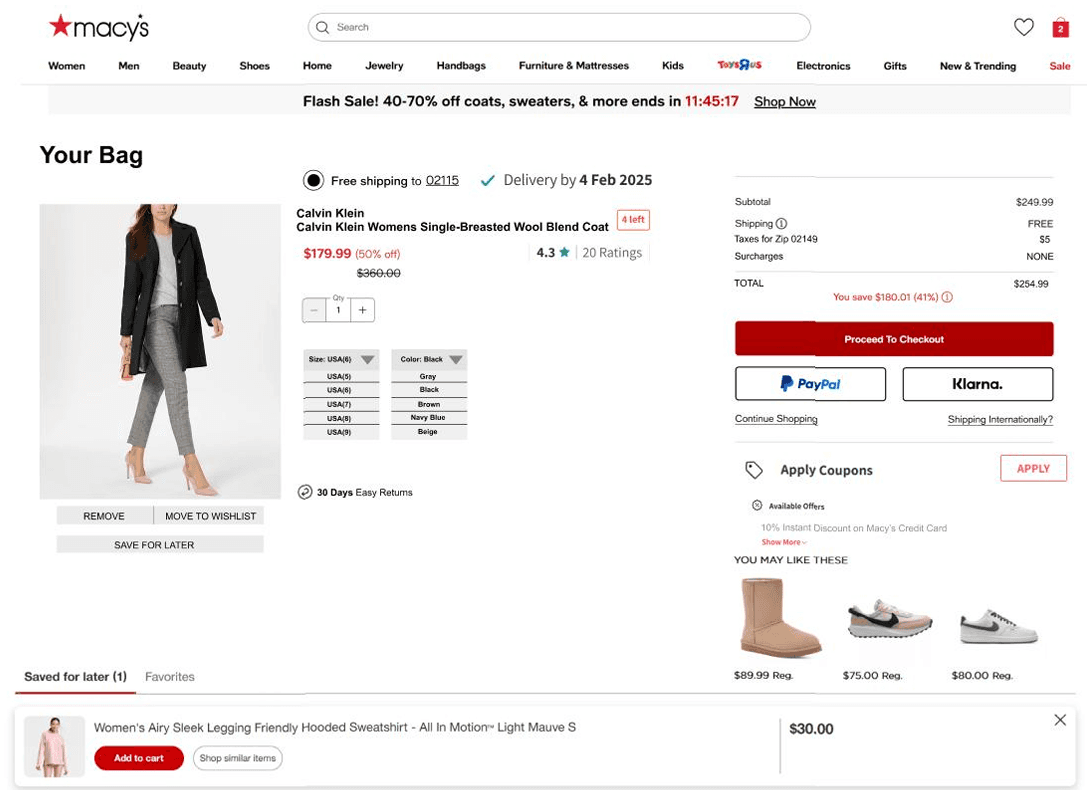
User Flow Redesign – Added inline editing for product attributes and quantity changes
Wireframing & Prototyping – Built cart layout with editable cards and a “More like this”
recommendation section
Testing – Conducted peer feedback sessions to improve UI clarity and reduce distractions
UI Polishing – Final design focused on strong visual hierarchy and clean mobile-first layout
Process
The redesigned cart enabled users to make quick adjustments without leaving the page, reducing
cognitive load and streamlining the path to checkout. The "More like this" feature boosted product
discovery without disrupting the checkout flow. The redesign was praised for its simplicity and
improved clarity, especially on smaller screens.
Outcome
Empowering users with in-place editing reduces friction and increases conversion
Cart pages are a great place to add subtle personalization without overwhelming the user
Simpler mobile UI patterns make a significant difference in reducing decision fatigue during checkout
Key Learnings
As the sole UX/UI designer, I led the research, ideation, wireframing, and prototyping stages. I
focused on interaction design for cart editing, usability heuristics, and UI enhancements that
support user control and immediate feedback. The prototype was built in Figma and iterated
based on peer feedback.
Simplifying the Macy’s Shopping Cart